
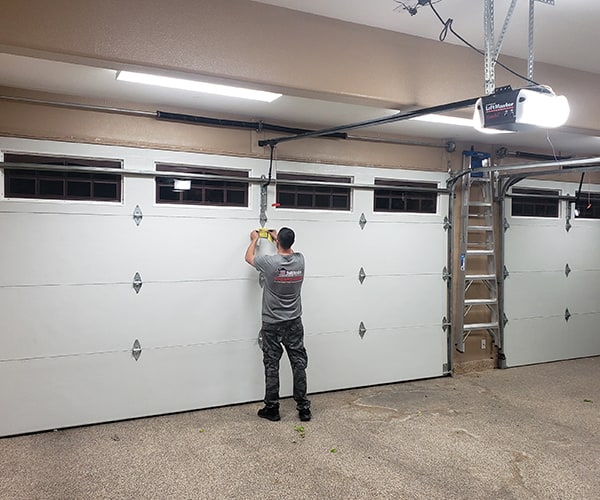
A garage door emergency can happen without warning, whether your garage door won’t open, becomes stuck closed, comes off track, or has a broken spring, snapped cable, or garage door opener failure. These problems can affect your home’s security and create potential safety risks. If you need immediate assistance, our Emergency Garage Door Repair in Calgary service provides fast, professional repairs for urgent garage door problems. This guide explains what to expect during an emergency garage door repair service, from the initial inspection and diagnosis to the repair process and final safety checks, so you know what happens when a qualified technician arrives..
What Is Considered a Garage Door Emergency?
Not every garage door problem requires immediate service, but some issues should be addressed as soon as possible to protect your safety, security, and property.
Common garage door emergencies include:
- Broken torsion or extension springs that prevent the door from opening or make it unsafe to operate.
- Snapped or loose garage door cables that cause the door to become uneven or unstable.
- Garage doors that have come off their tracks or have bent tracks preventing safe operation.
- Garage doors stuck open or closed, leaving your home unsecured or blocking access.
- Garage door opener failures, including motor, remote, wall control, or photo-eye safety sensor issues.
- Broken rollers, damaged hinges, or impact damage affecting the door’s movement.
- Garage doors making loud grinding or snapping noises, which may indicate a failing spring, cable, or roller.
If you experience any of these problems, avoid forcing the door or attempting repairs yourself. Components such as high-tension springs and garage door cables require specialized tools and training to repair safely.
What Happens During an Emergency Garage Door Repair Visit?
Every emergency repair begins with a safety inspection to identify the cause of the problem and determine whether the garage door can be operated safely. While every repair is different, most emergency service calls follow a similar process.
1. Initial Safety Inspection
The technician inspects the garage door springs, cables, rollers, tracks, hinges, garage door opener, photo-eye safety sensors, and visible hardware for damage, wear, or safety concerns. If the door is off track, unbalanced, or at risk of falling, it will be secured before any repairs begin.
2. Diagnosis and Repair Recommendations
Once the inspection is complete, the technician identifies the cause of the failure and explains the recommended repair. You’ll receive an upfront estimate, along with information on whether the issue can be repaired immediately or if replacement parts are required.
3. Repair or Component Replacement
Depending on the problem, the technician may replace torsion or extension springs, garage door cables, rollers, damaged hardware, or repair the garage door opener, motor, or safety sensors. If additional parts are needed, the next steps and expected timeline will be explained before work continues.
4. Testing and Final Safety Checks
After the repair, the garage door is tested to ensure smooth operation. The technician checks the garage door balance, spring tension, track alignment, auto-reverse system, photo-eye sensors, and opener to confirm the door is operating safely before completing the service.
How Long Does an Emergency Garage Door Repair Take?
The time required depends on the type of problem, the condition of the garage door, and whether replacement parts are immediately available. Many common emergency repairs can be completed during the initial visit.
Typical repair times include:
- Broken spring replacement: Approximately 1–2 hours.
- Garage door cable replacement: Approximately 1–2 hours.
- Off-track garage door repair and track alignment: Approximately 1–2 hours.
- Garage door opener repairs, including motor or photo-eye safety sensor issues: Approximately 1–3 hours.
- Roller, hinge, or hardware replacement: Typically less than 1 hour.
If the garage door has extensive structural damage or requires special-order replacement parts, an additional visit may be needed. Your technician will explain the expected repair timeline before work begins.
Disclaimer: Repair times are estimates only and may vary depending on the garage door type, the extent of the damage, parts availability, and on-site conditions.
Why You Should Avoid DIY Emergency Garage Door Repairs
While simple tasks like replacing a remote battery or clearing debris around the photo-eye safety sensors may be safe, most emergency garage door repairs should be left to a qualified technician. Components such as torsion springs, extension springs, and garage door cables are under high tension and can cause serious injury if handled incorrectly.
Avoid attempting to:
- Replace broken torsion or extension springs.
- Repair or reconnect snapped garage door cables.
- Force an off-track garage door back into place.
- Adjust spring tension or garage door hardware.
- Operate a garage door that appears damaged, unbalanced, or unstable.
If your garage door is making unusual noises, becomes difficult to operate, or is stuck open or closed, stop using it until it has been professionally inspected.
Safety Tip: Never stand beneath a damaged garage door or attempt to lift it manually if you suspect a broken spring or cable. The door can become unstable and fall unexpectedly.
What Happens After the Repair Is Complete?
Once the repair is complete, the technician performs a final inspection to confirm the garage door is operating safely and all repaired components are functioning as expected.
During the final inspection, the technician will typically:
- Test the garage door’s opening and closing operation.
- Check the garage door balance and spring tension.
- Verify the garage door opener, auto-reverse system, and photo-eye safety sensors are working correctly.
- Inspect the repaired springs, cables, rollers, tracks, and other hardware.
- Recommend any additional maintenance if signs of wear are found.
Before leaving, the technician should explain the repairs completed, answer any questions, and provide maintenance recommendations. If applicable, you’ll also receive information about warranties for replacement parts or completed repairs.
Frequently Asked Questions
How quickly can a technician respond to an emergency garage door repair?
Response times depend on your location, technician availability, weather conditions, and the time of your request. When you contact us, we’ll provide an estimated arrival time and keep you updated if there are any delays.
Can I manually open my garage door if a spring is broken?
It is generally not recommended. A broken torsion or extension spring can make the garage door significantly heavier and more difficult to control. Attempting to lift it manually may increase the risk of injury or further damage. Wait for a qualified technician to inspect the door before operating it.
Will my garage door be repaired during the first visit?
Many common emergency repairs, including broken spring replacement, garage door cable repairs, roller replacement, and some garage door opener repairs, can often be completed during the initial visit if the necessary replacement parts are available. If additional parts are required, your technician will explain the next steps and expected timeline.
What information should I provide when booking an emergency garage door repair?
To help the technician prepare, describe the problem, note whether the garage door is stuck open, stuck closed, off track, making unusual noises, or has visible damage. If you know the garage door or opener brand (such as LiftMaster, Chamberlain, Genie, Craftsman, Marantec, or Linear), sharing that information can also assist with the initial assessment.
What are the most common causes of garage door emergencies?
Common causes include broken torsion or extension springs, snapped cables, garage door opener failures, damaged rollers, bent tracks, misaligned safety sensors, accidental impact, and wear from regular use. In Calgary, freezing temperatures and ice buildup can also affect garage door performance during winter months.

Roopinder Singh China is the owner of Calgary Garage Doors Inc., a Calgary-based garage door company established in 2016. He oversees the company’s garage door services and brings practical business and industry experience to the information published on the website.
Experience: 10+ years
Expertise: Garage Door Repair · Installation · Garage Door Openers · Door Service