
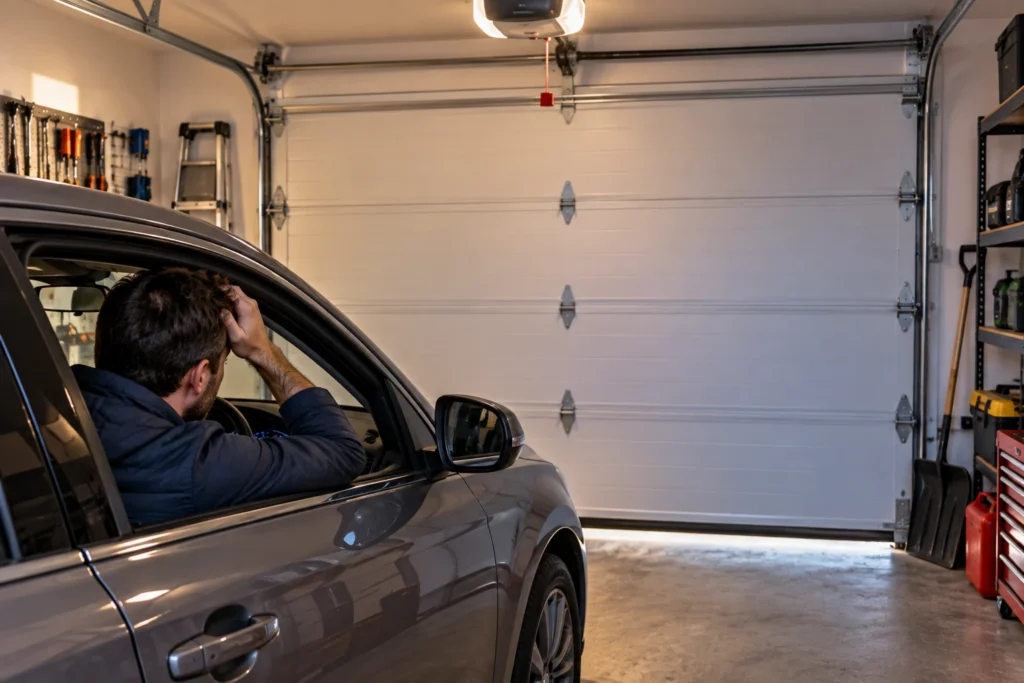
Your car is all set to go, but the garage door just won’t open. This can happen for a number of reasons in Calgary. It could be a broken garage door spring, a garage door opener that is not working, a bottom seal that is frozen, a damaged track or even a power outage.
First, don’t push the door. A door that feels heavier than it should, is crooked or sticks halfway up may have a mechanical problem that makes it unsafe to operate manually. It can also damage the door, opener, rollers or cables.
This guide will help the homeowner quickly identify the likely cause and what can be safely checked. You will also learn when a simple repair will solve the issue and when it’s time to call for Calgary garage door repair or emergency repair.
Immediate Safety Warning: Before You Do Anything
If your garage door is stuck, don’t immediately pull the red emergency release cord. First, check that the door is fully closed and look for signs of a broken spring or damaged cables.
Important: Do not pull the emergency release if you suspect a broken spring and the door is only partially open. Once you disconnect the garage door opener, the door can become very heavy and may move or fall suddenly.
The garage door is mainly supported by a torsion spring. When it breaks, the opener may no longer be able to operate the door safely. Trying to lift the door yourself can also cause an injury.
Before You Try to Open the Door
- Keep the door closed if you suspect a broken spring.
- Do not pull the emergency release cord when the door is open.
- Do not keep pressing the garage door opener button if the motor is struggling.
- Look for obvious damage, such as a broken spring, loose cable, bent track, or crooked door.
- Do not force the door upward if it feels unusually heavy.
If the door is fully closed and the spring system looks intact, you may be able to use the emergency release to open it manually. If you see a broken spring or another major mechanical problem, stop and call a qualified garage door technician.
This approach also follows manufacturer safety guidance to use the emergency release with the door closed when possible, since an unbalanced door can move unexpectedly.
Scenario A: Snapped Torsion Spring
When your torsion spring breaks, your car can get stuck inside the garage. If you hear a loud snap and the garage door opener struggles to lift the door, the spring could be broken.
What Happened?
The spring helps the counterbalance system support the door’s weight. When it breaks, the door suddenly feels much heavier. You might also see a gap in the spring above the door.
Why Can It Happen in Calgary?
Garage door springs wear out after repeated spring cycles. Cold weather, ice, and extra resistance can put more strain on an already worn system. However, temperature alone does not cause a spring to fail.
Can You Open It Manually?
If the spring is broken, do not force the door open. The door can be dangerously heavy and difficult to control. Do not disconnect the opener or disturb the spring or cables.
Learn more about signs your garage door springs need repair.
The Fix
A professional should check the torsion or extension springs, cables, and counterbalance system and replace the broken spring with the correct equipment. If your car is stuck inside, it’s best to arrange garage door spring replacement rather than force the door.
Scenario A: Snapped Torsion Spring
If a torsion spring breaks, your car can be stuck in the garage. If you heard a loud bang and the garage door opener is now straining, humming, or only lifting the door slightly, one of the first things to check is a failed spring.
What Happened?
The torsion spring is part of the door’s counterbalance system, which helps support the door’s weight when it opens and closes. When it breaks, the door can suddenly feel a lot heavier. You might also notice a visible gap in the spring above the door.
Why Can It Happen in Calgary?
Garage door springs will eventually wear out from repeated spring cycles. Every time the door opens and closes, it adds another cycle to the spring. Cold temperatures can make an already tired system work harder, particularly if ice or snow adds resistance around the door.
But cold weather alone does not mean a spring will fail. Age, use, and existing wear are also factors.
Can You Open It Manually?
If the spring is broken, do not try to force the door open. Without the counterbalance of the spring, the door can become dangerously heavy and difficult to control. Do not disconnect the opener or disturb the spring, cables, or brackets.
For more clues, check out our guide on signs your garage door springs need repair.
The Fix
A technician should check the torsion spring or extension spring, cables, and counterbalance system before replacing the failed component. Spring replacement requires the correct spring and specialized tools, including winding bars for many torsion-spring systems.
If your spring breaks and you are stuck inside, schedule garage door spring replacement instead of trying to lift or fix the door yourself.
Scenario B: Bottom Seal Frozen to the Concrete
Check the garage door bottom seal if the opener strains, groans, or starts to lift the door before reversing. In Calgary, melting snow and slush can collect under the weather seal and freeze to the concrete slab overnight.
What Happened?
The garage door closes down on the rubber seal against the floor. If water gets under it and freezes, the seal can stick tight to the concrete. The frozen seal holds the bottom edge in place, which may cause the motor to strain as the opener tries to lift the door.
Why Calgary’s Freeze-Thaw Cycles Matter
Winter weather in Calgary can lead to repeated freeze-thaw cycles. Warm spells can melt snow and slush, which then freezes when temperatures drop again.
This ice buildup may also damage the seal if you repeatedly force the door open.
Safe Ways to Free the Door
Begin with the least aggressive approach:
- Stop pressing the opener repeatedly. Forcing the door can damage the weather seal or place extra stress on the opener.
- Use a suitable tool to remove loose ice around the bottom edge.
- Use warm water on the frozen section to help release the ice. Never use boiling water.
- Use a household hair dryer to warm a small frozen area. Keep electrical equipment away from standing water.
- Dry the concrete slab and seal once the door opens to help prevent refreezing.
- Use silicone lubricant suitable for garage door seals if conditioning is needed. Silicone-based products can help keep rubber flexible in cold weather.
Clopay also suggests not forcing a frozen door and recommends removing ice gently or using warm water.
See how snow and ice can damage your garage door for more Calgary-specific winter problems.
When to Call a Technician
If the seal is still frozen, the door still won’t move, the opener continues to strain, or you see damage to the door or weather seal, call a garage door technician.
A technician can determine whether ice caused the problem or whether another mechanical issue is keeping the door from working properly.
Scenario C: Opener Humming, But Door Won’t Open
If your garage door opener runs but the door doesn’t move, don’t keep pressing the remote. The problem could be with the drive system, trolley, chain, or belt. A broken spring or a door that is binding can cause similar symptoms.
What’s Going On?
You press the wall button or remote, hear the motor running, but the garage door stays where it is.
Depending on your opener, you may notice that the chain drive or belt drive isn’t moving. A problem with the trolley, carriage, or internal drive gear can stop the motor’s movement from reaching the door.
Before assuming the opener has failed, check whether the door feels unusually heavy or appears stuck. A broken spring or mechanical obstruction can also put extra strain on the opener.
Cold Weather Can Make the Problem Worse
Garage door problems can become more noticeable during cold weather. Ice around the door, stiff components, and added resistance can make the opener work harder.
That doesn’t mean Calgary’s cold weather automatically causes an opener to fail. It can, however, make an existing mechanical problem more noticeable.
Can You Open It Yourself?
Only attempt to operate the door manually when it is fully closed and the spring system appears intact.
If the door appears safe to operate, the emergency release can disconnect the opener’s trolley from the door. You can then lift the door by hand.
If the door feels unusually heavy, moves unevenly, looks crooked, or has a broken spring or cable, stop. If the door binds or cannot be operated safely, LiftMaster recommends contacting a trained technician.
When the Opener Needs Professional Repair
A professional inspection makes sense when:
- The motor runs, but the door will not move.
- You hear repeated grinding or humming.
- The opener works intermittently.
- The chain or belt does not move normally.
- The door works inconsistently.
- The opener continues to struggle even after obvious obstructions have been removed.
You may also find it helpful to read our guide on common garage door opener problems in Calgary.
If the opener itself needs repair, see our garage door opener repair in Calgary service.
Scenario D: Garage Door Track Binding or Misalignment Problem
If your garage door moves partway, catches at a certain point, or reverses, check the vertical track, horizontal track, and garage door rollers for visible problems. A bent track, loose bracket, or alignment issue can create enough resistance to stop the door.
What’s Happening?
Uneven or jerky movement can point to a track problem. The door may start normally, slow down at one point, and then stop or reverse.
You may also notice one side of the door moving differently from the other or hear scraping as the door moves. A damaged or misaligned track can also cause a garage door roller to move out of position.
How to Check
Before calling a technician, you can perform a basic visual inspection. Look for:
- Something blocking the vertical or horizontal track
- A visibly bent section of track
- Loose track brackets or hardware
- A door that sits unevenly
- A roller that is visibly outside the track
Do not disassemble the track or adjust components under tension. A visual inspection can help you spot an obvious problem, but it cannot confirm that the entire garage door alignment is safe.
Don’t Force the Door
If the door repeatedly binds or reverses, stop using the opener. Continued operation can put extra strain on the opener and may damage the rollers, track, brackets, or other components.
Don’t try to straighten a severely bent track yourself. Moving the track without addressing the underlying alignment problem can create additional damage.
If the door has come off the track, see our guide on how to fix a garage door that’s off track.
Professional Track Adjustment
A technician can inspect the garage door rollers, track brackets, horizontal track, vertical track, and alignment to identify where the binding is coming from.
Depending on the problem, the repair may involve adjusting a track bracket, correcting the track alignment, replacing a damaged roller, or repairing a damaged section of track. After addressing the mechanical problem, the technician can also check the opener’s force setting.
The goal is to get the door moving smoothly again without making the opener work against unnecessary resistance.
Scenario E: Power Outage
A power outage can render your garage door opener completely dead. If the opener has no lights or sound, check that the garage has power before assuming the door has failed.
What Happened?
If a power failure occurs, the opener may not respond to the remote or wall control. The opener lights may also not come on.
Check to see if other electrical devices in the garage are working. If they also have no power, check the circuit breaker, if it is safe to do so. A wider power interruption could also affect the garage.
Safe Manual Release
If the door seems to be working normally, you can disconnect the opener trolley by using the emergency release.
- Shut the door all the way.
- Use the emergency release to release the opener.
- If the door feels balanced and moves normally, lift it manually.
- Get your car out of the garage.
- Close the door and lock it.
- Once the power is restored, reattach the opener following the manufacturer’s directions.
Do not try to lift the door by hand if it feels unusually heavy or is difficult to control. The garage door spring provides most of the counterbalance needed for safe manual operation.
When It Isn’t Just a Power Problem
The outage might not be the only problem if:
- The door feels heavier than usual.
- The spring appears broken.
- The cable seems loose or disconnected.
- The door is crooked.
- You can’t lift the door safely.
In these situations, stop operating the door. A broken spring, loose cable, or damaged door can make manual operation unsafe. Have the system checked by a qualified garage door technician before using it again.
Can You Open a Garage Door Manually When Your Car Is Trapped?
Yes, if the door is fully closed, balanced, and does not appear damaged, you may be able to manually open it. Check the torsion spring, lift cables, and counterbalance system for visible damage before using the emergency release.
When Manual Operation May Be Safe
Manual garage door operation may be reasonable when:
- The door is fully closed.
- The torsion spring looks intact.
- The lift cables are still attached properly.
- The door is upright and nothing looks damaged.
- The door feels balanced when you lift it.
If these conditions look normal, you can use the emergency release to disconnect the opener and raise the door by hand. Go slowly and stop if the door feels heavier than normal or does not move smoothly.
Do Not Attempt It If
If you notice any of the following, do not try to lift the door by hand:
- A broken torsion spring
- A loose or broken lift cable
- A door that has come off its track
- A door that is partially open or unstable
- A door that feels very heavy
- Bent or damaged components
A broken spring or cable can affect the entire counterbalance system. The door may suddenly feel much heavier than usual or move unexpectedly.
If you cannot confirm that the door is balanced and mechanically sound, don’t force it open just to get your car out. Keep clear of the door and get it checked by a professional.
What Not to Do When Your Garage Door Is Stuck
Forcing a garage door that is stuck can be dangerous. Follow these basic garage door safety rules until you know what caused the problem.
- Don’t keep pressing the garage door opener. It can strain the motor and make the problem worse.
- Don’t pull the emergency release while the door is partly open. If the spring system has failed, the door may drop.
- Don’t force a heavy door open. A broken torsion spring can make the door much heavier.
- Don’t replace a torsion spring yourself. The spring is under high tension and needs the right tools.
- Don’t repair a damaged lift cable yourself. A loose or broken cable can cause the door to move suddenly.
- Don’t force an off-track door. You could damage the track, rollers, or door.
- Don’t keep using a damaged door. If you see a broken spring, loose cable, bent track, or other damage, stop.
If the door looks unsafe, leave the garage door opener off and stay out of the way until a qualified technician has inspected it.
Need Emergency Garage Door Repair in Calgary?
A garage door that is stuck or damaged can quickly become a safety issue. Never try to repair springs, cables, or other high-tension parts yourself, or force the door open.
If you can safely identify an obvious problem, such as a power outage or visible obstruction, fix it without forcing the door. If you find a problem with the spring, cable, opener, track, or structure, contact a qualified garage door technician.
Our emergency garage door repair in Calgary service can help diagnose and repair the issue if your vehicle is stuck or your residential garage door is not working safely.
For non-emergency problems, you can also request garage door repair in Calgary to get the door working safely again.

Roopinder Singh China is the owner of Calgary Garage Doors Inc., a Calgary-based garage door company established in 2016. He oversees the company’s garage door services and brings practical business and industry experience to the information published on the website.
Experience: 10+ years
Expertise: Garage Door Repair · Installation · Garage Door Openers · Door Service